
Calcium Acetate 667: A Patient Guide to Use and Safety

Calcium Acetate 667 is a prescription phosphate binder used to reduce serum phosphorus in adults with end-stage renal disease on dialysis, and each capsule or tablet contains 667 mg of calcium acetate, equal to 169 mg of elemental calcium. If your kidney team prescribed it, the point is simple: take it with food so it can grab phosphorus from that meal before your body absorbs it.
You're probably not reading about this medicine out of curiosity. More often, this starts after a dialysis treatment, with lab results in hand and a familiar question: “I'm already watching what I eat, so why is my phosphorus still high?”
That question makes sense. Dialysis patients hear a lot of rules about food, fluids, and pills, and calcium acetate 667 can feel like just one more instruction. But this medication fits into a very practical part of the day: breakfast, lunch, and dinner. Once you understand that it works around meals, not around the clock, the prescription usually makes a lot more sense.
Table of Contents
How a Phosphate Binder Works in the Gut - A simple way to picture it - Why timing beats guesswork
What the 667 mg Strength Actually Contains - Why this matters at mealtime - Calcium Acetate 667 at a Glance
Dosing Built Around Each Meal - Why the schedule follows the plate - Why the pill count can add up - Meal-based habits that make this easier
How It Compares to Other Phosphate Binders - Side-by-side practical comparison - Where calcium acetate 667 tends to fit - What your nephrologist is balancing
Common Side Effects and What to Watch For - Symptoms that deserve attention - What to watch for at home - Same-day call versus next visit
Monitoring and Daily Habits That Keep Therapy on Track - A short checklist you can actually use - What to bring to your next clinic visit - The mindset that helps most
Why Calcium Acetate 667 Is Part of Dialysis Care
You finish dialysis, sit down with your lab sheet, and see phosphorus is still high. That can feel unfair. You may already be passing on foods you enjoy, reading labels, and trying to follow a long list of instructions.
The missing piece is often the meal itself.
With end-stage renal disease, the kidneys cannot remove phosphorus the way healthy kidneys do. Dialysis helps, but it happens only during treatment sessions. Eating happens every day, several times a day, so phosphorus can keep coming in between treatments. The FDA-linked DailyMed labeling for calcium acetate describes calcium acetate as a prescription medicine used to reduce serum phosphorus in adults with ESRD on dialysis.
That is why calcium acetate 667 becomes part of dialysis care. It gives your care plan something to do at the table, not just in the dialysis chair.
A practical way to look at phosphorus control is to split the job into three parts:
Dialysis removes some phosphorus during treatment.
Food choices can lower how much phosphorus comes in.
Calcium acetate 667 helps deal with the phosphorus in the meal you are about to eat.
Patients often understand the prescription better once they connect it to a daily routine. Breakfast is one job. Lunch is another. Dinner is another. The binder is built around those moments because that is when phosphorus is entering your body.
Here is the plain-language reason this matters. If you skip the binder with a meal, the phosphorus from that meal may be absorbed before you think to take the pill later. A late dose cannot do the same job as a dose taken with food.
So the goal is not to memorize one more rule. The goal is to build a meal habit. When the plate comes out, the binder should be part of the routine too.
How a Phosphate Binder Works in the Gut
Dinner is on the table. You take a few bites of chicken, rice, and vegetables, and that meal brings phosphorus with it. Calcium acetate 667 does its job in that exact moment. It stays in the digestive tract, meets some of the phosphorus from the food, and binds it into a form your body can pass out in the stool instead of absorbing.
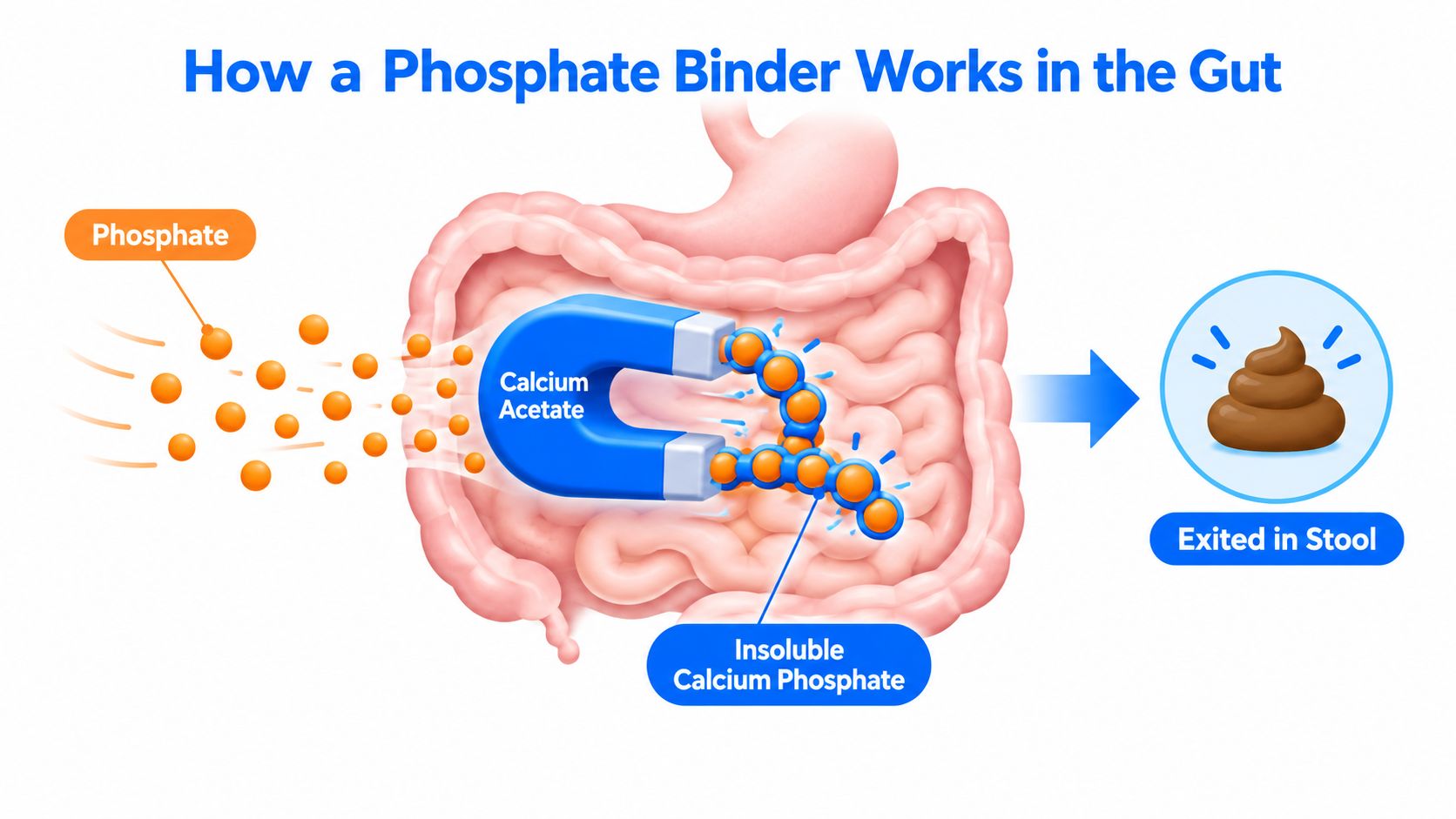
A simple way to picture it
Calcium acetate works like a catcher waiting in the path of the meal. It does not travel through your body looking for phosphorus later. Its main job happens inside the gut while food is being digested.
That timing explains a rule that can feel picky at first. The binder needs to be there when the meal is there. If you take it long after eating, much of the phosphorus may already be past the point where the medicine can bind it.
It only binds phosphorus that is still in the digestive tract while the meal is being processed.
Patients on dialysis often ask, “Why can't I just take it later if I forget?” The plain answer is that this medicine is tied to the meal, not just to the clock. A blood pressure pill can still work if it is taken a little late. A phosphate binder is different because its target is the food in front of you.
A second format can help if you like hearing the concept explained out loud:
Why timing beats guesswork
A practical way to use calcium acetate is to connect it to the first bites of each meal. That gives the capsule or tablet the best chance to meet the phosphorus coming in with that food.
Your kidney team may ask questions like these because each one changes how well the binder can work:
Did you take it as the meal started? That is when it can bind phosphorus most effectively.
Did you skip the dose because you skipped the meal? Without food, there may be little for the binder to do.
Was the meal heavier than usual or higher in phosphorus? A meal with more dairy, processed foods, beans, nuts, or cola may bring more phosphorus with it.
If your prescription changes later to another meal-time binder, such as lanthanum carbonate chewable binder options, the same everyday habit still matters. The binder has to meet the meal to do its work.
What the 667 mg Strength Actually Contains
At the table, “667” is the part that helps your care team keep the math straight. Each capsule or tablet contains 667 mg of calcium acetate (anhydrous). That amount provides 169 mg of elemental calcium, or 8.45 mEq of calcium, according to the DailyMed calcium acetate labeling.
That detail matters because your binder is doing two jobs in real life. It is there to catch phosphorus from food in your gut, and it also adds calcium to your total treatment plan. Your nephrologist and dialysis dietitian care about both numbers.
A simple way to read the label is this: 667 mg is the weight of the calcium acetate compound, not pure calcium.
That is where many patients get tripped up. If a bottle says calcium acetate 667 mg, it is easy to assume you are swallowing 667 mg of calcium. You are not. The actual calcium portion is much smaller, and that is why the label separates calcium acetate from elemental calcium.
Why this matters at mealtime
Say you take one pill with breakfast, one with lunch, and one with dinner. Your team can estimate how much calcium is coming in from the binder across the day because every pill has the same standardized amount. That makes dose changes safer and more predictable.
It also helps explain why this medicine is not treated like an over the counter calcium product. A calcium supplement is usually taken to add calcium to the body. Calcium acetate is prescribed to people on dialysis because the calcium in it helps bind phosphorus from meals. The calcium content still counts, but the purpose is different.
Calcium Acetate 667 at a Glance
Attribute | Value |
|---|---|
Active ingredient per unit | 667 mg calcium acetate (anhydrous) |
Elemental calcium per unit | 169 mg |
Calcium amount in mEq per unit | 8.45 mEq |
Main use | Reduce serum phosphorus in adults with ESRD on dialysis |
Prescription status | Prescription phosphate binder |
Common forms referenced in U.S. records | Tablet, capsule, and oral solution |
You may hear different product names in the dialysis unit. Some people know it as PhosLo, while others receive a generic. There is also an oral solution form in FDA records, including Phoslyra, which contains the same active ingredient in liquid form, as shown in the FDA approval documentation.
For day to day use, the big takeaway is practical. The “667” gives your team a consistent unit to work with each time they match your prescription to your usual meals and your lab results.
Dosing Built Around Each Meal
You sit down to eat breakfast, take a few bites, and then remember your binder on the kitchen counter. That small moment is the whole reason calcium acetate 667 is prescribed around meals instead of around the clock. Its job starts when food reaches your stomach and intestines, especially food that brings phosphorus with it.
A common starting schedule is 2 tablets or capsules with each meal, as noted earlier. After your team checks your phosphorus and calcium labs, they may raise or lower that amount over time. Many dialysis patients end up taking more than one pill with each meal, which can feel frustrating at first, but the reason is practical. The binder has to match what your usual plate looks like.
That is why breakfast, lunch, and dinner matter more than the clock.
Why the schedule follows the plate
Calcium acetate works in the gut while the meal is there. If no meal is present, there is much less for it to bind. If the meal is larger, or higher in phosphorus, your prescribed amount may need to do more work.
A simple way to picture it is a sponge meeting a spill. The sponge has to be there while the spill is there. Wiping the counter later does not help much. In the same way, taking calcium acetate well after the meal usually misses part of the job.
This also explains why dose changes are not a grade on your effort. If your clinician increases the number of pills per meal, the message is usually straightforward. Your current dose is not catching enough phosphorus from the meals you eat.
Why the pill count can add up
For many dialysis patients, the hard part is not understanding what the medicine does. The hard part is turning it into a meal habit that repeats every day.
Three meals a day can mean several binder pills a day. Add an occasional restaurant meal, a long dialysis day, or a poor appetite, and the routine gets easier to break. That is normal. It does not mean the medication is wrong for you. It means the schedule has to fit real life, not an ideal day on paper.
Some people also notice that their meals are uneven. A light breakfast may be very different from a heavier dinner. Your prescriber may still keep the same per meal instructions, or may adjust the plan based on labs and your eating pattern. The goal is not perfect symmetry. The goal is better phosphorus control across the week.
Meal-based habits that make this easier
A few routines help more than patients expect:
Keep your binder where meals start. If you always eat breakfast at home, store it somewhere you see before the first bite.
Carry a backup supply. This helps with lunch away from home, meals after dialysis, or a day that runs late.
Take it with the meal, not after you are done eating. Closer to the first bites is usually easier to remember and fits how the medicine works.
Tell your clinic if your eating pattern changes. Missed meals, poor appetite, frequent snacks, or bigger evening meals can all affect how well the plan matches your day.
Calcium acetate 667 usually works best when you treat it like part of the plate setting. Fork, drink, binder. Once that pattern clicks, the prescription tends to feel less like a rule and more like another step in the meal routine.
How It Compares to Other Phosphate Binders
At dinner, this comparison becomes practical fast. You are not choosing between abstract drug classes. You are choosing what needs to be on the table with your meal, how many pills you can realistically take, and whether your labs can tolerate the tradeoff.
That is why your nephrologist looks beyond phosphorus control alone. With any binder, the question is how it fits your eating routine across the week. Calcium acetate is commonly used in dialysis care because it can lower phosphorus well, but it also adds calcium to the plan. For some patients, that balance works. For others, the extra calcium becomes the reason to switch.
Side-by-side practical comparison
Binder | Contains Calcium? | Typical Meal Routine | Main Tradeoff |
|---|---|---|---|
Calcium acetate 667 | Yes | Often taken with each main meal | Helpful phosphorus binding, but calcium levels need follow-up |
Calcium carbonate | Yes | Also tied to meals | Can add even more calcium exposure, depending on the product and dose |
Sevelamer | No | Taken with meals, sometimes as several tablets | Avoids calcium load, but pill burden can still be heavy for some patients |
Lanthanum | No | Taken with meals, often as a chewable | May mean fewer pills for some people, but the chewable format is not for everyone |
Where calcium acetate 667 tends to fit
Calcium acetate often sits in the middle of the binder choices. It is stronger than a simple diet change, familiar in dialysis care, and built around meals the same way your phosphorus intake is. But it is not a calcium-free option.
A simple way to frame it is this: some binders bring calcium to the meal, and some do not. If your phosphorus is still high and your calcium is staying in range, calcium acetate may continue to make sense. If calcium starts creeping up, your team may look at a non-calcium binder such as Renvela sevelamer tablets.
What your nephrologist is balancing
Your prescriber is usually trying to solve several meal-by-meal problems at once:
Is phosphorus still running high after meals across the week?
Is calcium staying in a safe range on this binder?
Can this patient keep up with the pill routine at breakfast, lunch, and dinner?
Would switching binders fix one issue while making adherence harder?
This is why a binder change usually reflects a change in your labs, your side effects, or your daily eating pattern. It is less about one product being universally better and more about matching the binder to the way you eat.
Common Side Effects and What to Watch For
Dinner is a common time for problems to show up. A patient takes calcium acetate with the meal, then later feels queasy, gets constipated, or notices that the usual post-dialysis tiredness feels heavier than normal. That does not always mean the medicine is wrong for them. It often means the binder routine needs a closer look.
The side effects reported most often with calcium acetate are hypercalcemia, nausea, and vomiting, as noted earlier. Of those, high calcium deserves the most respect because this binder does its job by bringing calcium into the meal.
Patients often ask a fair question. “If I feel bad after taking it, is the dose too high?” Sometimes yes. Just as often, the issue is how the dose lines up with meals, how much phosphorus is in those meals, or where calcium is landing on labs.
Symptoms that deserve attention
High calcium can be sneaky. It does not always feel like a clear medicine reaction.
Some people first notice nausea or vomiting. Others feel more constipated, weaker than usual, or mentally foggy and chalk it up to a hard dialysis week. That is why patterns matter. If you feel off after several meals in a row, or if family members notice you seem less sharp, speak up.
Do not try to push through repeated vomiting or a sudden change in alertness. Those symptoms deserve a call.
What to watch for at home
A good way to track side effects is to tie them to meals, because that is when you take the binder and when it is supposed to work.
Nausea after eating: Pay attention if it keeps happening with breakfast, lunch, or dinner instead of showing up as a one-time upset stomach.
Vomiting: Call the dialysis team if it repeats, especially if you cannot keep food or medicines down.
Constipation: Bring it up early if bowel movements become hard, infrequent, or uncomfortable for several days.
Weakness or unusual fatigue: Mention it if it feels different from your usual dialysis recovery.
Mental fog or confusion: Treat this seriously, especially if it is new or getting worse.
Writing down which meal came before the symptom can help more than writing down the symptom alone. “Nausea after dinner three nights this week” gives your team something practical to work with.
Same-day call versus next visit
Some side effects can wait for a routine review. Others should not.
Contact the dialysis unit the same day if you have repeated vomiting, new confusion, marked weakness, or you cannot keep meals and medicines down.
Bring it up at your next visit if you have mild nausea, occasional stomach upset, or early constipation that is not getting worse. Small side effects still matter. They are one of the main reasons people start skipping binder doses, especially at meals away from home or on days when appetite is poor.
Monitoring and Daily Habits That Keep Therapy on Track
The best Calcium Acetate 667 routine is usually the simplest one you can repeat without much thought. Patients who do well often stop treating it like a complicated renal rule and start treating it like part of setting the table.
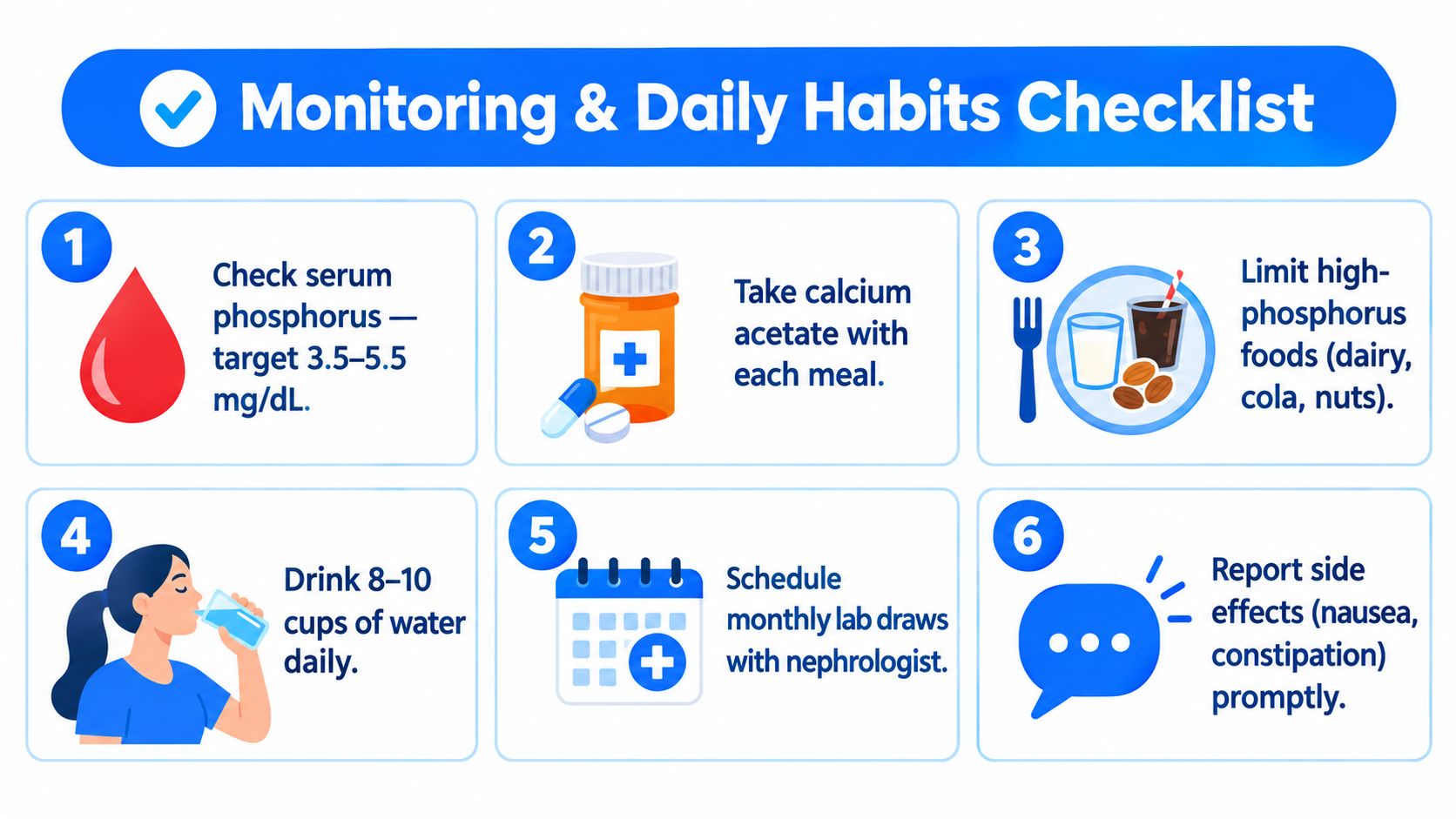
A short checklist you can actually use
Take it with meals: Pair the dose with the first bites, not the end of the meal.
Keep your lab schedule: Your team uses phosphorus and calcium trends to decide whether the binder is helping or causing problems.
Don't adjust the dose on your own: If meals changed or you missed doses, say so plainly. That helps the team make better decisions.
Track side effects in simple terms: Write down what happened, when it happened, and whether it was tied to eating.
Carry an updated medication list: This matters when another doctor adds or changes medicine.
Mention new prescriptions promptly: Spacing and interaction planning may matter with other drugs.
What to bring to your next clinic visit
A good binder review doesn't require a perfect memory. Bring a few practical notes instead:
Bring this | Why it helps |
|---|---|
Your actual pill bottle | Confirms the product and strength |
A short list of missed doses | Shows whether the issue is timing, not failure |
Notes on meals that are hardest to cover | Helps tailor the schedule |
Side effect notes | Gives the pharmacist and nephrologist something concrete to act on |
A related medication some dialysis patients also discuss with their renal team is Rocaltrol, because calcium balance, phosphorus control, and other parts of mineral management often overlap in kidney care. That doesn't mean the medicines do the same job. It means your regimen is usually reviewed as a whole, not one bottle at a time.
The mindset that helps most
The patients who manage this medication best usually don't aim for perfection. They aim for consistency. If breakfast is the dose you miss most often, fix breakfast first. If restaurant meals throw you off, keep a small backup supply with you.
A binder routine works when it matches your real day, not an ideal day.
That's the heart of Calcium Acetate 667 counseling. It's a meal medicine for dialysis patients. Once that clicks, the rules stop feeling arbitrary and start feeling usable.
If you're managing a dialysis medication routine and need a dependable place to review related prescription and generic treatment options, TheMedicineKart lists a broad online pharmacy catalog with pharmacist-reviewed orders and customer support. It can be a practical place to look up kidney-care related products, compare available formulations, and stay organized while following the plan your nephrologist prescribed.


Comments