
Brimonidine and Brinzolamide Eye Drops Guide

A glaucoma diagnosis often lands in the middle of an ordinary week. One visit turns into a bottle of drops, a new schedule, and a quiet worry about whether your eyes are under control. If your eye doctor has mentioned brimonidine and brinzolamide, the first thing to know is simple, these drops are meant to lower pressure inside the eye, because pressure control is the main measurable target in glaucoma care and ocular hypertension management.
For many people, the confusing part isn't the word “pressure.” It's the idea of needing more than one medicine, or a fixed combination instead of separate bottles. This guide breaks that down in plain language, using a plumbing analogy, practical use tips, and the trade-offs that matter in daily life. It also helps you understand when a combination drop can be a better fit, and when a single medicine may still be enough.
Table of Contents
Introduction to Brimonidine and Brinzolamide Combination Therapy
How Brimonidine and Brinzolamide Work Together to Lower Eye Pressure - Brinzolamide slows fluid production - Brimonidine reduces inflow and helps outflow
From Two Established Drops to One Fixed Combination - Why that timeline matters - Where the combination fits
How Effective Is the Combination Compared With Each Component Alone - Side by side comparison - What the numbers mean in plain language
Dosing Schedule and Correct Administration Technique - Use the bottle the same way each time - Make the drop stay where it belongs - Missed dose handling
Side Effects Interactions and Important Precautions - What to watch for - Practical precautions
Introduction to Brimonidine and Brinzolamide Combination Therapy
A patient hears “your eye pressure is too high,” and the room gets quieter. That's because the next question is obvious, what exactly is being pushed, and why does it matter? In glaucoma and ocular hypertension, the answer is the fluid pressure inside the eye, and lowering that pressure is the central goal of treatment.
Brimonidine and brinzolamide are often used together in a fixed combination because they attack the pressure problem from two directions. One medicine reduces how much fluid the eye makes, and the other lowers fluid production through a different pathway while also helping fluid leave the eye more effectively. That's why clinicians often think of this pairing as a practical option when one drop alone isn't giving enough control.
A fixed combination can be easier to live with than carrying two separate bottles. It can reduce the number of dosing steps, and for some people that matters more than they expect until they're trying to fit treatment into a workday, school pickup, or travel routine. Still, convenience isn't the same thing as the right choice for every person, because tolerability, target pressure, and the rest of the treatment plan all matter.
Practical rule: if a single drop is not reaching the target pressure, a combined drop can make treatment simpler without changing the basic goal, which is steady pressure control.
The best way to think about this guide is as a step-by-step map. First comes the basic mechanism, then the history behind the combination, then the evidence comparing it with the separate drops, and finally the day-to-day details that decide whether it fits your routine.
How Brimonidine and Brinzolamide Work Together to Lower Eye Pressure
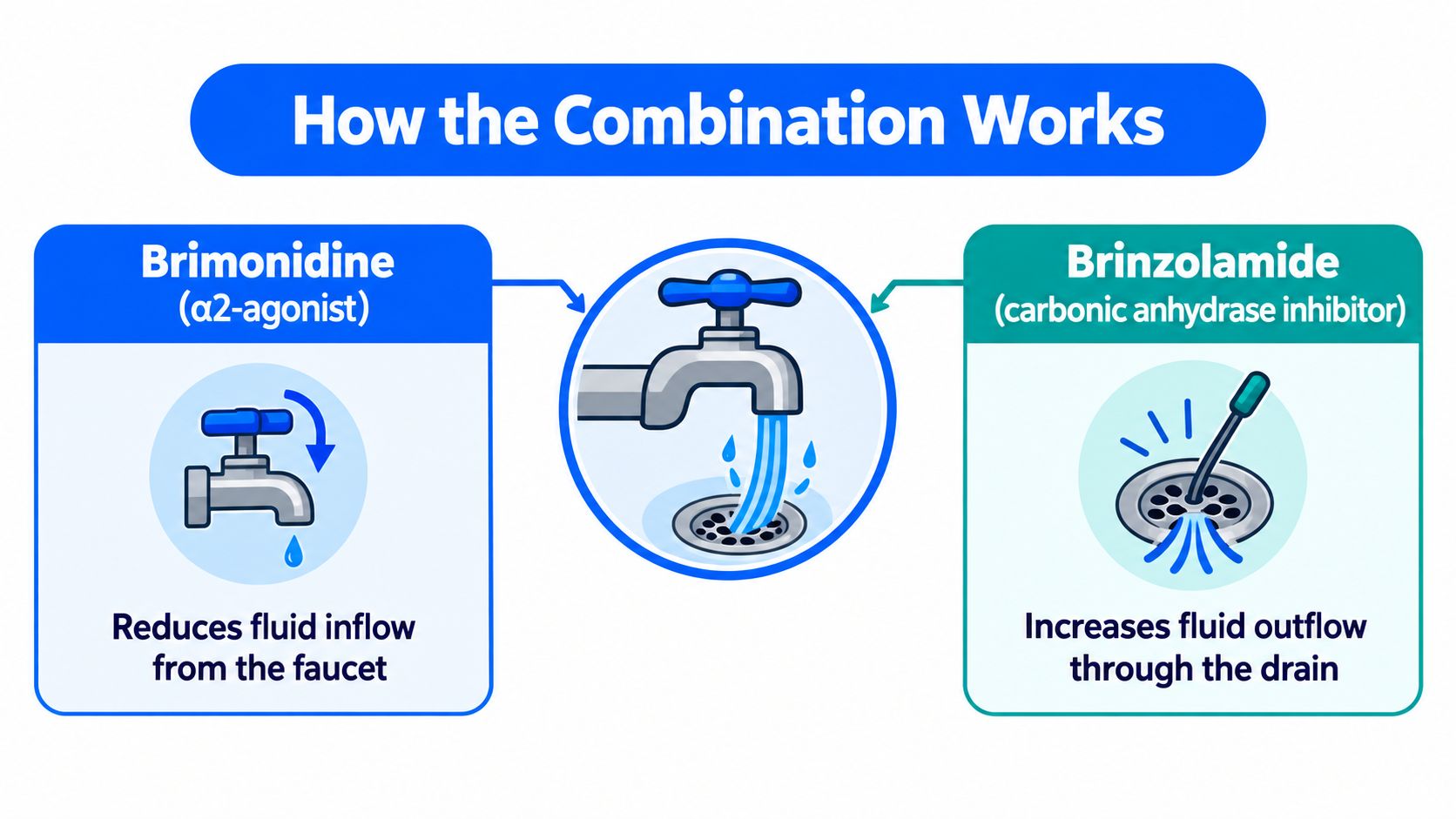
Think of the eye as a small room with a faucet and a drain. Fluid is always moving through the room, and pressure rises when too much comes in, or not enough goes out. Brinzolamide and brimonidine work like two different repair calls on the same plumbing problem, one turns down the faucet, the other helps the drainage system do its job better.
Brinzolamide slows fluid production
Brinzolamide is a carbonic anhydrase inhibitor. In plain English, it helps the eye make less aqueous humor, the clear fluid that keeps the eye nourished but can raise pressure when there's too much of it. Less incoming fluid means less pressure build-up, which is why this class is useful in glaucoma care.
Brimonidine reduces inflow and helps outflow
Brimonidine is an alpha-2 adrenergic agonist. It also lowers fluid formation, and it can increase uveoscleral outflow, which means more fluid can leave through an alternate pathway. In the plumbing picture, this is both a lowered faucet and a clearer exit route.
The combination matters because the two medicines do not do the exact same job. That's why fixed combination therapy can produce an additive effect, and why a combined product can work better than either ingredient alone when one medicine has already reached its limit.
The goal isn't to use “more medicine” for its own sake. The goal is to use two complementary actions when one action by itself isn't enough.
A simple way to remember it is this, brinzolamide reduces how much fluid enters the system, and brimonidine reduces inflow while also supporting a second drainage path. That's the dual-mechanism logic behind the combination, and it explains why eye doctors often reserve it for cases where pressure still needs to come down.
If you want to compare how a brinzolamide product is presented in routine pharmacy use, this product page gives a practical example of the same ingredient in monotherapy form, Azopt eye drop brinzolamide.
The concept is easier to remember after you see it visually.
From Two Established Drops to One Fixed Combination
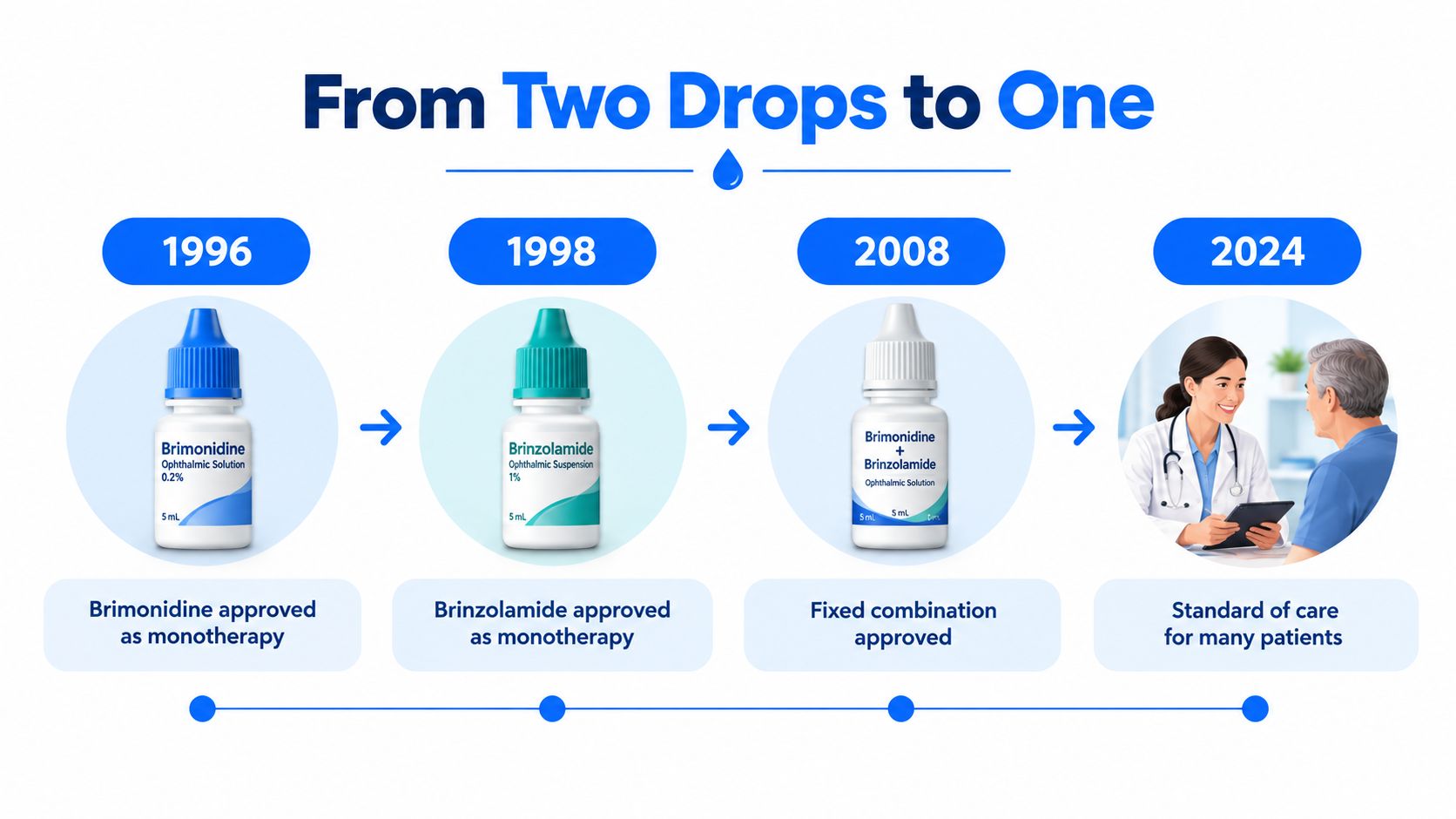
The history matters because this combination wasn't built around a brand-new molecule. Brinzolamide had already been approved in 1998, and brimonidine had already been approved in 1996/1997 before the fixed combination entered the market later. The fixed-dose product, SIMBRINZA, was initially approved in the United States in April 2013, and FDA labeling lists the initial U.S. approval year as 2013 PMC review of the approval timeline.
Why that timeline matters
That sequence tells you something important about the medicine's logic. The combination was not invented from scratch, it was assembled from two established glaucoma therapies that clinicians already understood. In other words, the science behind it came from combining known tools in a more efficient format rather than introducing a wholly new ingredient.
For patients, that usually means the product sits in a familiar part of the treatment. Doctors already know what each component tends to do, how each one is used, and what side effects have been seen with separate use. The fixed combination then adds a convenience layer on top of that existing foundation.
Where the combination fits
The broader trend behind fixed-dose eye drops is simple, fewer bottles can mean fewer dosing steps. In chronic eye disease, that can matter because treatment is repetitive, long-term, and easy to miss when the day gets busy. A single bottle can be easier to remember than two separate ones, especially for people already juggling other medications.
If you want to see another established glaucoma drop in a single-agent format, this example is useful context, Combigan ophthalmic solution timolol brimonidine.
The historical takeaway is straightforward. Brimonidine and brinzolamide became a fixed combination because ophthalmology already had two useful, time-tested pieces, and the industry turned them into a simpler delivery option for patients who needed more than one pathway of pressure control.
How Effective Is the Combination Compared With Each Component Alone
A combination drop makes sense only if it does what two separate bottles sometimes cannot, lower pressure more reliably. For brimonidine and brinzolamide, the question is whether the paired “pipes” of pressure control, one reducing fluid production and the other helping fluid drain, give a stronger result than either line alone.
In a 3-month Phase 3 randomized trial in open-angle glaucoma or ocular hypertension, the fixed combination lowered mean intraocular pressure more than either ingredient by itself. Mean IOP was 16.3 to 19.8 mm Hg with the combination, compared with 19.3 to 20.9 mm Hg for brinzolamide alone and 17.9 to 22.5 mm Hg for brimonidine alone Phase 3 trial data.
Side by side comparison
Treatment | Mean IOP Range mm Hg | Mean Percentage Reduction |
|---|---|---|
Fixed combination | 16.3 to 19.8 | 26.7% to 36.0% |
Brinzolamide alone | 19.3 to 20.9 | 22.4% to 27.9% |
Brimonidine alone | 17.9 to 22.5 | 20.6% to 31.3% |
A separate randomized study reported the same pattern. The combination produced mean percentage IOP reductions of 26.7% to 36.0%, compared with 22.4% to 27.9% for brinzolamide and 20.6% to 31.3% for brimonidine same evidence base.
What the numbers mean in plain language
Glaucoma care is really about reaching a target pressure and staying there. If one drop leaves the eye above target, adding the second agent can be a practical next step, especially when the goal is steady pressure control rather than a brief response.
A six-month randomized trial found that the pressure benefit held over time, with month 6 values staying similar to month 3. The combination still outperformed either single agent, and the authors reported no new or increased risks compared with the individual components six-month trial.
A useful way to think about it is this. If one drop is like opening only part of a drain, the fixed combination opens two different pressure pathways at once. That can help when monotherapy is close but not quite enough, although a single drop may still be sufficient when the target pressure is already being met.
Dosing Schedule and Correct Administration Technique
Most eye-drop problems happen before the medicine even has a chance to work. The drop misses the eye, the bottle tip touches the lashes, the bottle is squeezed too hard, or the next drop is put in immediately and washes the first one away. Good technique matters because a well-chosen medicine still fails if it never reaches the right place.
Use the bottle the same way each time
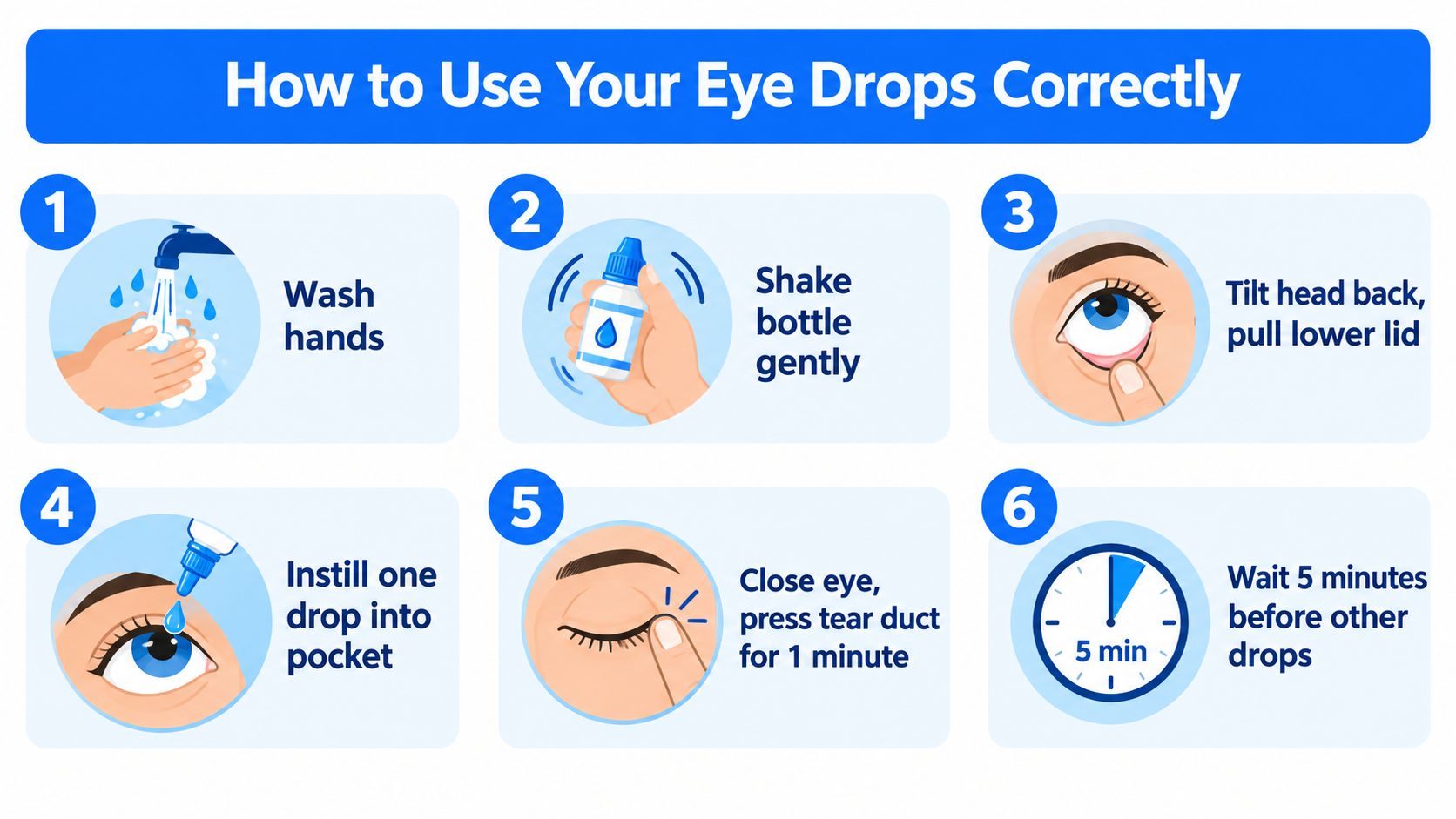
The suspension should be shaken gently before use, because suspensions can settle. Wash your hands first, tilt your head back, and pull down the lower lid to create a small pocket for the drop. The tip should not touch your eye, eyelid, or fingers.
Make the drop stay where it belongs
After the drop lands, close your eye gently and press the inner corner near the tear duct for about a minute. That step helps keep more medicine in the eye and less in the tear drainage system. If you use another eye drop, wait several minutes before the next one so the first drop isn't diluted or washed out.
Missed dose handling
If you miss a dose, take it when you remember unless it's almost time for the next one. Don't double up just because you're trying to catch up. Chronic eye care works best when the routine is steady, not improvised.
Small habit, big payoff: the person who uses one drop correctly every day often gets more benefit than the person who uses two bottles inconsistently.
The exact schedule should always match the prescriber's directions, because your eye doctor may tailor the plan to your pressure response, other medicines, and tolerability.
Side Effects Interactions and Important Precautions
A fixed combination can simplify the bottle routine, but it does not remove the side effects that come with its ingredients. Common eye-related effects include hyperemia, blurred vision, eye irritation, and allergy. Some people also notice dysgeusia or dry mouth review of adherence and tolerability. These reactions do not automatically mean the treatment is unsuitable, but they do matter if they keep showing up or become hard to live with.
What to watch for
If the eye feels red, gritty, or irritated after each dose, mention it at follow-up. The same goes for an unusual taste in the mouth or dryness that makes speaking or swallowing uncomfortable. Small side effects can still shape whether one bottle feels easier or harder to use in real life.
The convenience story is also more complicated than it first appears. Reviews and retrospective data suggest the combination can help with convenience, compliance, and treatment satisfaction, while the evidence often relies on surrogate adherence measures rather than long-term refill persistence or visual outcome data. That gap matters because a medicine only helps if a person can keep using it.
Practical precautions
Tell your eye doctor about other drops you use, especially if your routine already involves several medicines. Mention allergy history, contact lens use, and any problem that makes dry mouth or eye surface irritation harder to tolerate. If symptoms are causing you to skip doses, the plan may need to be adjusted instead of asking you to keep forcing it.
The balance is straightforward. A fixed combination can reduce bottle burden, but the benefit depends on whether the side effects stay mild enough for steady daily use. If tolerability becomes the main problem, the simplest-looking regimen on paper may not be the best one for you.
Choosing the Right Next Step for Your Glaucoma Care
A glaucoma visit often comes down to a simple practical question. Is the current drop lowering pressure enough, and can you still use it every day without trouble? If the answer is no, brimonidine and brinzolamide may be discussed because it brings together two pressure-lowering pathways in one bottle. If a single medicine is already doing the job, keeping the plan simple can be the better fit.
The plumbing analogy helps here. One medicine may open the drain a bit or slow how much fluid the eye makes. A fixed combination does both at once, so it can be useful when one route alone has not reached the target your eye doctor set. If pressure is already at goal, adding another drop may create more burden than benefit.
For people comparing next steps, the decision is less about “stronger” and more about fit. Is the pressure still above target? Are side effects making the routine hard to keep? Would one bottle reduce missed doses, or would a combination make the schedule feel more complicated? Those are the questions that usually matter most in daily life.
A familiar monotherapy reference for open-angle glaucoma care is Xalatan eye drops, which can help frame the choice between one drop and a combination. Some people do well with a single agent. Others need a second mechanism to get pressure lower without stacking separate bottles.
The best next step is to bring the routine to the appointment. Mention the timing of doses, missed drops, irritation, and how the bottles fit into the day. That gives your eye doctor a clearer picture of whether combination therapy is worth the trade-off, or whether a simpler regimen still makes more sense.


Comments